A Small Makeup Kit for an Overnight Stay
A small makeup kit for an overnight stay keeps a familiar look within reach while helping you avoid rummaging through unused products at your destination.
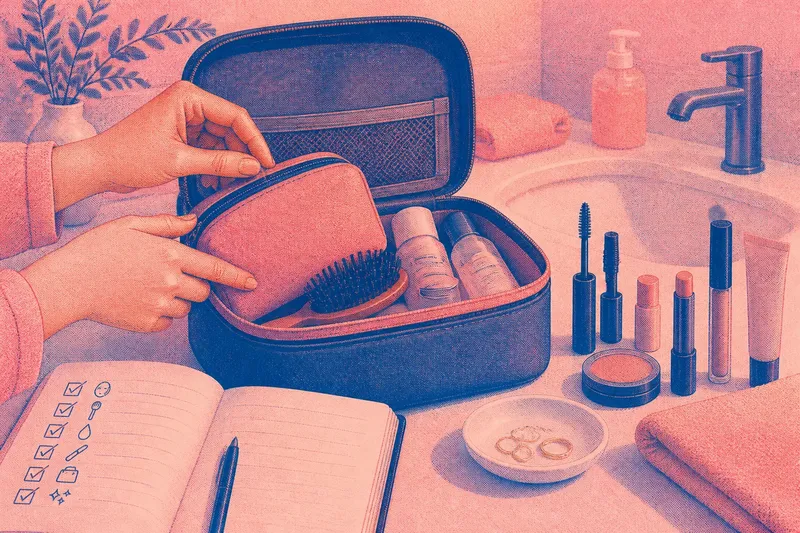
You are standing by the bathroom sink with your weekender open, trying to fit a makeup pouch beside a hairbrush and toiletries. A small makeup kit for an overnight stay is easier to plan when you decide what you want to do at the mirror, rather than treating the trip as a reason to bring a smaller version of your whole collection.
Choose one look to anchor the kit
Start with the face you are likely to want, not with a tour of your drawers. You might choose a little complexion coverage, defined brows, mascara, cheek color, and a comfortable lip; the point is to identify a look that feels familiar enough to use without deliberation.
Consider the actual occasions you have in mind. If you will arrive late and get ready only the next morning, a dinner-ready eye palette may have no clear purpose. If you expect to wash your face before bed and apply makeup again before leaving, plan for that sequence instead of packing products for every imagined change of mood.
Say you expect a late arrival followed by breakfast out. You choose concealer, brow gel, mascara, cream blush, and tinted balm, then picture applying them in that order at the destination; the result you expect is a recognizable look without searching through extras. Those are invented choices for this situation, not a universal packing formula.
Separate makeup from the rest of the travel plan
A makeup pouch can quietly become a catchall for items that belong to other parts of getting ready. Decide whether skin cleansing, moisturizer, sunscreen, or hair styling products are being packed elsewhere, so the makeup kit does not grow simply because the full bathroom routine is not yet accounted for.
Keep products in the category that matches their use. Makeup remover belongs with the evening routine, while a face wash or moisturizer is part of skin care; a brow pencil sharpener is a tool for makeup. This division makes it easier to spot what is genuinely missing without turning the pouch into a general-purpose toiletries bag.
Imagine your toiletries are already packed in a separate wash bag, but you have not planned how to remove mascara at night. You add the familiar remover you use for that job and leave face wash and moisturizer in the other bag; the expected result is a makeup pouch that supports its own routine without duplicating the rest of the bathroom shelf.
Decide what earns a place by how you use it
Set the likely products on a clean towel and say what you would do with each one. A concealer might address the areas you choose to cover; mascara defines lashes; a tinted balm adds color while remaining comfortable to reapply. If two items would produce the same effect for the look you chose, decide which one you would reach for and leave the other aside.
Do not count on a product’s extra uses unless they are already part of your habits. A cream color may work on cheeks and lips, but if you only enjoy it on your cheeks, plan for that single use. A product’s label can suggest possibilities; your own familiar application tells you whether they belong in this kit.
Think of the kit like a small set of keys: each item should open a door you expect to use, rather than add another option to sort through. That does not mean every item must be indispensable. A familiar lip color you enjoy wearing can have a place even if a more neutral choice could serve the same basic role.
Use a short decision list before closing the pouch
- Check whether each item supports the look you chose; if it does, keep it, and if not, leave it at home.
- Check whether two products serve the same purpose for this trip; if they do, pack the one you are more likely to use, and if their roles differ, keep both only when each has a clear occasion.
- Check whether a complexion product is a shade and formula you already use comfortably; if it is, pack it, and if not, choose a familiar alternative or skip complexion coverage.
- Check whether an item needs a brush, sponge, or sharpener; if so, include the tool you actually use, and if a clean finger or built-in applicator works for you, leave the extra tool out.
- Check whether you have a comfortable way to remove the makeup you plan to wear; if you do, keep that remover with the evening routine, and if not, add a familiar suitable option or simplify the makeup plan.
- Check whether a liquid or cream container could soil other belongings if it opens; if it could, secure it in a suitable sealed bag or protective pouch, and if it is securely closed and unlikely to contact clothing, pack it with the other products.
- Check whether each item is clean, usable, and stored as its packaging directs; if it is, pack it, and if not, leave it out or follow the product directions before deciding.
Which choices make the kit easier to use?
Should makeup remover go in the pouch?
Pack a remover if it is the product you comfortably rely on to take off the makeup you plan to wear. If it belongs more naturally with your skin-care items, keep it there and make sure you know where it will be at bedtime.
Do I need makeup brushes for one night?
Bring a brush only when a planned product depends on it for the application you prefer. If you use clean fingers or an included applicator instead, leaving brushes behind keeps the makeup kit focused on your actual routine.
How can I choose between two similar products?
Compare what you want each one to do for this particular trip, then choose the one you already enjoy using for that purpose. If both remain equally useful, consider whether you have a distinct occasion for each; without one, the second is an option rather than part of the plan.
What if I want a different look while I am away?
Choose one adaptable product only if you already know how you would use it across the occasions you expect. If the alternate look is only a possibility, leave the extra products home and decide on another trip whether that change would have mattered.
Keep the kit comfortable to use
Arrange the products in the order you apply them, with tools beside the items that need them. A small pouch with a washable lining can be easier to manage if makeup marks the inside; keep lids secure and follow packaging directions for storage and hygiene.
For a final check, imagine setting the pouch beside the sink at your destination. If you can see what each item is for and reach it without emptying the bag, the small makeup kit for an overnight stay is ready; the remaining useful question is whether you will be glad to use what you packed, not whether you have covered every possible look.